
Leaving MAGA
An organization worth getting to know

I came across a podcast I think you’ll enjoy. The New Yorker Radio Hour featured an interview with an interesting guy named Rich Logis, who shared his experience of walking away from MAGA. Based on what he learned from that, he started an organization called Leaving MAGA. Donations are tax-deductible.
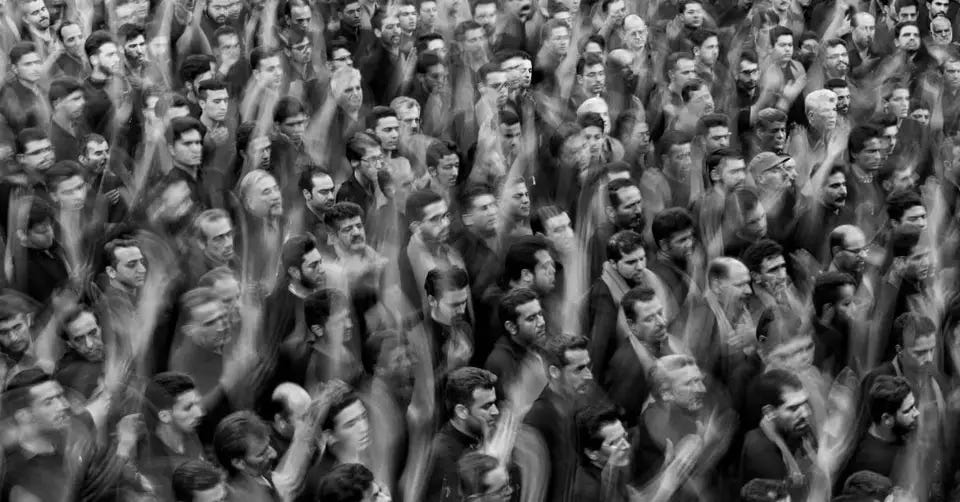
Rich Logis explains the hold MAGA has on its followers as due to two factors:
Our current divisions are mainly driven by our very different, segmented sources of information.
MAGA offers a sense of community and belonging for people who feel alienated and carry the scars of trauma in their lives.
If we feel disconnected from each other, it’s easy to believe that our own news sources are accurate while others spread propaganda. The charge is hard to refute when Fox News broadcasts outright lies and withholds reporting on news they their viewers will not like. I’ve examined my own news sources closely and found that, although they often get the facts right, the way they frame information tends to emphasize certain viewpoints and portray others as villainous or foolish.
It’s human nature to prefer information that aligns with our views rather than challenges them. It’s easy to forget that, for media conglomerates shaping our information, the goal isn’t to educate or enlighten but to satisfy shareholders. I remind myself that, no matter how much I appreciate Rachel Maddow, MSNBC (now MSNOW) shares the same mission as Fox News: to enrich its shareholders.
Eventually, we must take steps to bridge our divides. When the Trump administration falls, we’ll have a short window to reconnect before people’s positions become more entrenched again. We don’t need to agree on right versus left. We just need to learn to listen to each other better, as if that were as easy as it sounds.
If Logis is correct, then the question becomes “what caused us to have such bifurcated news sources and versions of the truth?”
The difference in perspective
Many of us have spent the past decade trying to understand why people follow MAGA. We often end up banging our heads against the desk. Logis offers a perspective I hadn’t heard before. MAGA followers are neither stupid, crazy, nor hell-bent on destroying the country. According to Rich Logis, people attracted to MAGA long for community and often carry the scars of trauma. The sense of purpose and belonging that comes from being part of a community is as essential as any other human need.
This is something I can relate to. Anyone who has ever been:
The new kid in school,
A gay child,
A transgendered person,
Someone with disabilities,
Someone from an abusive or alcoholic family…
...knows what it’s like to be seen as an outsider and shunned. I don’t know what it’s like to go all in on MAGA or Donald Trump, but I understand enough about exclusion and alienation to care about what the followers are feeling. Trauma, if that’s a factor, adds a whole other layer of anxiety and shame. Leaving MAGA prompts us to stop doing this:
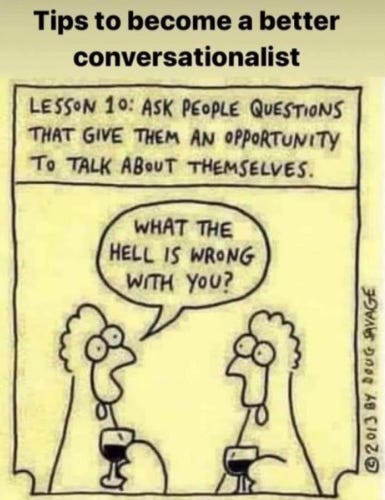
...and start asking them, simply and with care, what happened to them. The answers will be all over the map. One person might say they’re sick of the snotty liberal elites. Another might say they feel that migrants are replacing them. I doubt many would openly admit, “It gave me a place where I felt safe and like I belonged.” Still, if I assume that’s part of it, I am less likely to argue and more likely to respond with care and understanding.
Questions that start with “why” often trigger defensiveness, so asking why someone got involved in MAGA is a major empathy failure. Whenever someone has asked me why I’m LGBTQ, it just makes me want to punch them in the throat. It’s not hard for me to understand how someone else could feel the same way when asked to explain themselves.
Who benefits from us being so estranged from each other?
We didn’t end up in this particular mess by chance. Someone deliberately caused it. Before Donald Trump was in office, Vladimir Putin was meddling with our social media feeds and spreading lies to turn us against each other. Now we’re in a second Trump term, and honestly, everyone is paying the price for it. Our polarization definitely isn’t helping us, so who is it really benefiting? Power seekers and autocrats see America as a ripe field for sowing hatred and distrust, paving the way for a dictator to take control.
The sociological trends outlined in “Bowling Alone” have gradually led to us becoming more isolated, resulting in less face-to-face social and civic engagement. What caused this shift? According to Robert Putnam, the author of Bowling Alone, it was:
Generational displacement — fewer people live close to extended family with multiple generations regularly in contact.
Suburbanization and commuting mean more of us lack the time and bandwidth to do much else but get through the workweek.
Decline in participation in civic, community, religious, or cultural groups.
The move towards leisure centered at home. Television and social media are frequently solitary and insular activities.
Voter turnout decreased. In the 2024 presidential election, 90 million registered voters did not cast their ballots.
My long-held theory is that we owe these developments more to the marketing industry than anything else. Remember “the me generation?” That era exemplified marketing’s shift toward selling lifestyle, personal fulfillment, and self-improvement. Since 1980, we’ve been further divided by trickle-down economics. For a fascinating deep dive into this line of thinking, I recommend “Governing the Soul: The Shaping of the Private Self” by Nikolas Rose.
What the world needs now
In a democracy, we are equals, not rivals or enemies. To preserve democracy, I truly believe we must learn to communicate with people who are different from us and protect the space where diversity flourishes.
As I mentioned at the start, we’re at a turning point. MAGA seems to be breaking apart. Trumpism is proving to many to be false. Through our collective actions, we will decide whether to restore democracy or simply sit back and let someone else take control.
I hope we can reconnect and focus more on community benefits and the common good. Self-benefit products and activities will always exist and can still be valuable. What’s missing today is a sense of community identity and belonging. Through renewed connections to family and community, we will be firmly rooted in a world where people differ in many ways — some in ways we may not like, but never to the point where we forsake one another.
This year, at my house, we are directing our end-of-year charitable giving and volunteer efforts toward local organizations that promote an engaged community and an educated citizenry, right where we live. I believe this is where the solution begins. I aim to be part of it.
Song of the Day
“My Grown Up Christmas List” — Michael Buble
Support songwriters and support musicians by purchasing this track here or here or from a reputable vendor of your choice.
Keep on keepin’ on,
Cindy